Agriculture

Stewardship of Biodiversity and Soil Health

Natural ecosystems are complex, so protecting and promoting the well-functioning of natural habitats—i.e., ensuring abundant natural resource stocks and the provision of ecological service—bears inherent complexity. One practical approach for doing this is to implement different measures in- as well as off-field in agricultural landscapes. Different actions with different objectives in mind may be most appropriate in fields themselves, at their edges, and across surrounding landscape. Special attention is owed to maintaining habitat for pollinators and promoting healthy agricultural soils.

Biodiversity at the field level

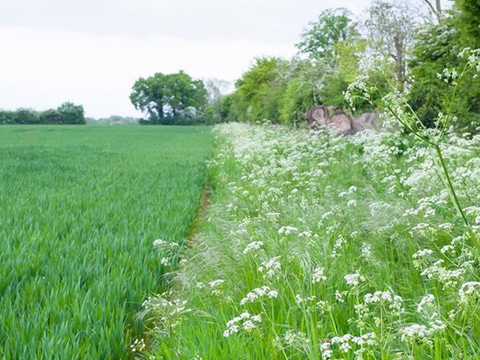
Best practice starts from cultivated areas: the field and its margins. Indeed, while farmland is manmade, it is a vibrant part of landscapes where both planned and associated agricultural biodiversity—agrobiodiversity in short—can be supported.

Booklet by Arcadis, Syngenta and Bioversity International on the benefits of multifunctional field margins

PreviewPDF (3.31 MB)

Leaflet by the Royal Society for the Protection of Birds' (RSPB) on pollen and nectar mixtures

PreviewPDF (158.68 KB)

Pollinator protection

Pollinators represent a subject of special interest when it comes to the stewardship of crop protection products. They perform a vital function without which not only a sizeable part of agriculture but of natural ecosystems in general would be unthinkable. Responsible decision-making in the application of pesticides can prevent possible adverse effects on pollinating organisms. Here, too, several best management options are available, as detailed below. Read further for material on pollinator protection.

In-field best practices

  • Whenever possible, spraying at blooming time of crops sould be avoided.
  • If an in-bloom application is necessary, spraying should be preferably done outside of foraging times of pollinators (i.e., early morning and evening).
  • Whenever possible, drift-reduzing nozzles shold be used and best practices for application followed (boom height, tractor speed, etc.) to minimize exposure of off-crop habitats via spray drift.
  • If indicated, appropriate no-spray buffers in the field need to be respected towards flowering adjacent vegetation.

Edge-of- and off-field best practices

  • Field margins and smaller unproductive areas can be used to establish flowering vegetation in agricultural landscapes (flower seed mixtures often available in countries).
  • If beekeepers manage hives nearby the field, communication on planned spraying times should be done to avoid any unacceptable impact of crop protection practices on bee populations.
Leaflet on habitat management for pollinators by the UK Centre for Ecology & Hydrology
Pollinator Partnership Canada's guide to planting forage for honeybees
CropLife Latin America's online course on Good Beekeeping and Agricultural Practices for the Health of Pollinators (EN, ES, PT)

Biodiversity at the landscape level

Stewarding natural habitats and biodiversity in the context of agriculture also means taking care of the landscape surrounding cultivated fields. In fact, semi-natural and natural systems maintain an intricate network of species, physical elements and functional relationships between them that remain central to the health of embedded cultivated landscapes. Some crucial levers to consider here are discussed below and followed by complementary materials.

Habitat creation and landscape diversity

Creating or preserving natural habitats in agricultural landscapes is important to maintain local biodiversity and protect endangered species. Besides forests and extensively managed meadows, shrublands, riparian areas, wetlands, and hedges are valuable landscape components. Farmers can help by:

  • Maintaining or reestablishing (multifunctional) hedges on their land.
  • Using areas of low productivity to establish locally recognized and potentially subsidized natural vegetation habitats or other biodiversity promoting installations (e.g., beetle banks, nesting boxes).
  • Avoiding very large fields (e.g., larger than 25 ha) and aiming to achieve a spatial pattern of different crops across the landscape, which provide a variety of habitats to plants and animals.

Nesting opportunities for birds

Birds are an essential part of terrestrian food webs and often regarded as iconic species for protection. Farmers can help to maintain or enhance bird species biodiversity and populations by providing nesting opportunities:

  • Maintain, restore or establish hedges and trees in agricultural landscapes.
  • Install nesting boxes for selected species of local relevance in adequate habitats near fields.

Promoting soil health

While many definitions of the term "soil health" exist, they generally refer to the soil's ability to perform its functions necessary for the support of ecosystems and the life within them. The soil is increasingly recognized as farmers' central asset and the basis of productive and resilient agricultural production. The soil itself hosts an intricate universe of micro-, meso-, and macro-fauna, and several options are available to farmers to nourish these to ensure the health of crops.
Farming & Water Scotland's Tips to Best Manage Farm Soils

Related topics

IPM Fundamentals
IPM is a dynamic and flexible system that leverages all available means and technologies to effectively prevent and combat crop pest and diseases. IPM principles allow the management of plant insects, weeds and diseases effectively while ensuring low environmental impact.
Protection of Water Bodies
Protecting water bodies near or adjacent to agricultural land from various potential sources of pollution from crop protection product use is essential to proper stewardship. Several best practices are established to handle everything from leaching into groundwater to the appropriate handling of tank mix residues.
Closed Transfer Systems
Discover how closed transfer systems can reduce operator exposure and the risk of spills during transfer.