Agriculture

Human Protection

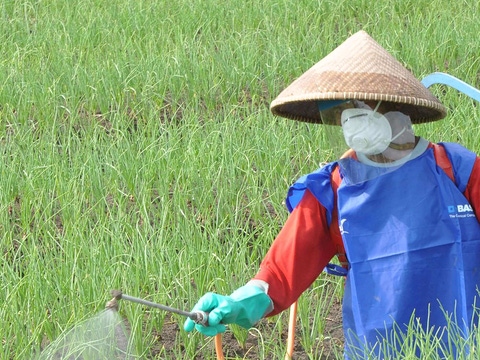
Farmers, operators, all bystanders and residents must be protected from potential adverse effect of inappropriate use of crop protection products. Farmers and operators, in particular, must use the right equipment for product delivery and wearing Personal Protective Equipment (PPE).

Solutions to minimize operator exposure

It is fundamental to distinguish between risk and hazard of pesticide use. While hazard is inherent, risk can be mitigated--namely through reducing the exposure to a particular hazard. There are several solutions to minimize operator exposure (OpEx). In particular, when applying crop protection products one ought to pay particular attention to:

  • Buffer zones
  • Timely noticing
  • Spray timing
  • Managing spray drift

Specific technology has been developed to support the reduction of operator exposure.

Closed Transfer Systems (CTS) like easyconnect are one such type of solution. You can find out more about CTS and easyconnect under the dedicated page.

Drones represent another innovative tool for the minimization of operator exposure. In recent years, drones have gained prominence for various agricultural uses. Among these, they have established themselves as a viable, efficient, lower-impact, and safer crop protection application technology. Find out more about drones on the page dedicated to application technology.

Finally, use of Personal Protective Equipment (PPE) is crucial as a last physical barrier between operators and crop protection products. Different garments of different types may be required depending on the specific product. For more information, please consult the page on Personal Protective Equipment.

For further general training and didactic material on human health and safety, see below.
Protection of bystanders and residents

Plant protection products are used in agriculture and horticulture in public areas. People not involved in using these products might be exposed by accident. People may be nearby when the product is used, or live or work near it. The authorisation of plant protection products must consider the risk of exposure to bystanders and residents, including children.

Both groups can be exposed dermally and/or by inhalation. Also, toddlers may be exposed orally, as they behave differently to adults. 

CLI video on preventing pesticide poisoning

Related topics

Personal Protective Equipment
Learn how appropriate personal protective equipment can help reduce exposure.
Product Selection & Purchase
Pesticides constitute an integral part of IPM strategy, but they should be selected and used responsibly with special attention to safety. Selecting the appropriate crop protection product is one of the most important steps to control and combat agricultural pests efficiently. Before purchasing any pesticide, there are several factors that should be taken into consideration.
During Application
Best practices for aerial application, reducing spray drift, and responding to pesticide poisoning incidents.