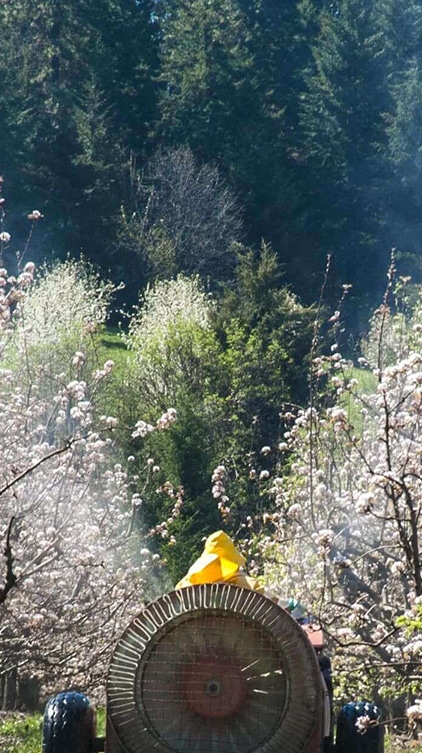
Pesticide application techniques are used to cover targets efficiently and keep pests under control with minimal contamination. Pesticide application techniques should be target-oriented to ensure safety to non-targets and the environment, so it is important to choose the right equipment, know how pests behave and use good dispersal methods.
Knowing the pest problem is important in order to identify exact location. The stage of the pest most vulnerable to control measures helps decide when to apply them. The size of the spray droplet depends on the size and mobility of the pest. How a pesticide works, how toxic it is and other physical and chemical properties help decide how to handle it and how to mix it. It is also important to know how to use the equipment properly. This helps to save time and to make the most of the equipment.
Pesticides are usually sprayed: either diluted or applied directly to crops in small drops using sprayers. Emulsifiable Concentrate (EC) and wettable powder formulations are usually diluted with water, which is a common carrier of pesticides. Sometimes oil is used to carry pesticides. The main things to think about when it comes to spray volume are:
- The amount of spray liquid needed for a certain area depends on the spray type, coverage, target area, and spray droplet size. Coarse spray droplets require more volume than small ones. If you need to cover both sides of leaves, you'll need more spray. Spraying techniques are classified by the volume of spray mix used--the volume of spray mix is arbitrary, but the following spray volumes are usually used for field crop spraying:
- High volume spraying (300 - 500 L/ha)
- Low volume spraying (50 - 150 L/ha)
- Ultra low volume spraying (< 5 L/ha)
- Lower volumes are better than high volumes. The more is sprayed, the higher the time, labour and cost requirements. However, lower volume applications are concentrated spraying of pesticides, which need proper consideration.
- Spray nozzles are used with sprayers to emit pesticide solutions in a fine spray. A spray nozzle emits spray liquid into small droplets and propels them away from the nozzle. Different nozzle designs produce different droplet sizes. To make droplets, energy is needed. Spray nozzles are classified as follows:
- Hydraulic energy nozzles
- Gaseous energy nozzles
- Centrifugal energy nozzles
- Thermal energy nozzles
Always refer to the product label to ensure specific application instructions are met, including required buffers.