Agriculture
Biological Crop Protection: Natural Solutions Helping Farmers Protect Crops and Reduce Food Waste
Biological crop protection is becoming an increasingly important complement to conventional products. BASF’s biological innovations, from Velifer® bioinsecticide to global investments in BioSolutions, expand the options available to farmers, particularly where market and consumer requirements call for alternative approaches. Join us as we follow Dr. Diana Londoño’s story and discover how biological crop protection helps farmers protect crops, manage resistance, reduce food waste, and support food production.

The tiny invaders threatening your salad
Mention fungi or bacteria in connection with crops, and most people probably think spoiled produce or harvest losses. But some microorganisms do exactly the opposite: they can help farmers protect their crops.
Especially at a time when changing regulations encourage the use of fewer chemicals in agriculture. Deploying a microbe to protect our favorite salad ingredients from their worst pests is a promising thought.
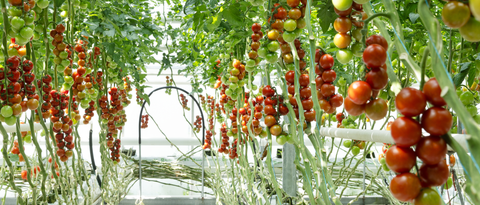
“Growers have used many different products to control aphids and thrips,” says Dr. Diana Londoño, Global Technical Lead Bioinsecticides at BASF who has spent more than 20 years working with growers. “But these pests have never been easy to manage consistently. The damage affects not only growers, but everyone further along the food chain. Entire boxes of tomatoes lose their value because pests damage them even after harvest before they reach consumers.”
And she continues looking beyond the field “Think of the amount of food wasted when these pests are not controlled.” Finding a way to outsmart these tiny invaders has thus become more than a scientific challenge – it’s an opportunity to give growers another tool to protect both their harvest and the food they produce.
Growers have used many different products to control aphids and thrips. But these pests have never been easy to manage consistently. The damage affects not only growers, but everyone further along the food chain. Entire boxes of tomatoes lose their value because pests damage them even after harvest before they reach consumers.


Recruiting a natural partner
Diana’s lab holds a collection of nature's own pest-fighting partners of living organisms. Among them is Beauveria bassiana strain PPRI 5339, a naturally occurring beneficial fungus that infects insect pests such as aphids and thrips, helping reduce their populations.
Diana’s team has helped transform these natural partners into products that can be used by growers in the field. “When I first started talking to growers about biological solutions,” she says, “they weren’t convinced they could deliver the performance they expected. Today, biologicals have become an important part of the crop protection toolbox and work alongside conventional products, giving growers more options to manage pests effectively.”
By combining naturally occurring biology with formulation expertise, BASF transformed a promising organism into Velifer® bioinsecticide, a reliable crop protection solution that growers can use with confidence. Initially developed for greenhouse production, Velifer® has become a global product, with registrations across multiple regions and crops.
Velifer® is a story of bringing a biological innovation from the greenhouse to growers around the world,” says Diana, “It is a great example within BASF’s BioSolutions portfolio, which spans biological seed treatments, bioinsecticides, biofungicides, biostimulants, pheromone-based solutions and beneficial nematodes.
A closer look at how Velifer® targets insect pests


Delivering reliable performance at scale
Until recently, biologicals have remained a niche segment of crop protection. Unlike conventional products, biologicals are living organisms, making them inherently more complex to produce consistently at commercial scale. Ensuring effective control for the diverse applications of global agriculture, beyond the greenhouses where they were tested and developed, presents an additional challenge. This complexity has historically constrained their broader adoption.Growers in all regions have continued to increase their adoption of biologicals as companies provide high-quality products that deliver consistently. BASF is committed to making BioSolutions available to a broader grower base.

For Velifer, BASF is now working to expand its availability through additional registrations, including outdoor uses in selected markets, helping bring biological crop protection to more growers worldwide.
To achieve this and manage the complexity of biologicals as such, the company invests in capabilities that extend far beyond research. By combining scientific expertise with strategic partnerships, targeted acquisitions and advanced manufacturing, the company is creating the foundation needed to bring biological innovations to farms around the world.
One major expansion milestone is the recent acquisition of AgBiTech. BASF strengthened its biocontrol portfolio by adding a scalable bioinsecticide solution focused on caterpillar management in major row crops. AgBiTech has a strong presence in Brazil, one of the fastest growing markets for biological crop protection, providing a foundation to expand to Europe and other regions.
BASF also commissioned a state-of-the-art, large-scale fermentation plant called the BioHub at the Ludwigshafen site, built specifically for the production of biological and biotechnology-based crop protection products. It helps the company deliver the consistent quality and reliable supply growers need – across geographies, climates and different local conditions.

It all comes back to the grower
At BASF, developing biological solutions starts with understanding growers and the different challenges they face across crops, regions and production systems. That farmer-first mindset drives an integrated approach, combining biologicals with chemistry, seed solutions and digital technologies helping farmers protect yield, manage resistance, farm efficiently and protect their crops under local conditions. Because no single technology can solve every challenge, diversity in the farmer’s toolbox remains essential.
“We can never become too reliant on one tool”, says Londoño. “Growers need different solutions that complement each other – so the tomatoes meant for tomorrow’s salad aren't lost before they even leave the greenhouse.”
Ultimately, the goal returns to where this story began: helping more tomatoes reach consumers while ensuring that months of a grower’s hard work are not lost to tiny pests.
Contact our expert Diana Karime Londoño, BASF Agricultural Solutions
Diana is an expert in biologicals with extensive development experience in BioInsecticides such as beneficial nematodes, entomopathogenic fungi, virus and bacteria such as Bacillus thuringiensis (Bt) protein crystals. In addition to research in the lab and the field, she’s always looking for innovative BioSolutions. Her life in science started in Colombia where she studied Microbiology, founding her passion in biologicals around the study of the bacterium Bacillus thuringiensis and development of its protein for pest control. After working in the industrial production of Bacillus thuringiensis, she moved to the United States to further develop her entomology expertise, earning master’s and doctorate degrees in the field. After working in different academic and government institutions, she joined BASF in 2013.


